12 Germanic Roots at the Heart of Everyday English
Learn a new word every day
Free on iOS & Android

Latin and Greek give English its fancy words, but its everyday core is Germanic. Meet 12 Old English roots and prefixes behind common words like freedom, childhood, fearless, and forward.

12 Germanic Roots at the Heart of Everyday English
English borrows its show-off words from Latin and Greek, but the words you actually live in are older and plainer. The bones of the language — the small endings and prefixes you use without thinking — are Germanic, inherited from Old English and its cousins across the North Sea.
These roots rarely stand alone. Instead they clip onto other words to build the everyday vocabulary of home, work, and feeling: freedom, childhood, fearless, forward. Learn a dozen of them and you start to see the sturdy frame holding thousands of common words together.
Endings that name a state or condition
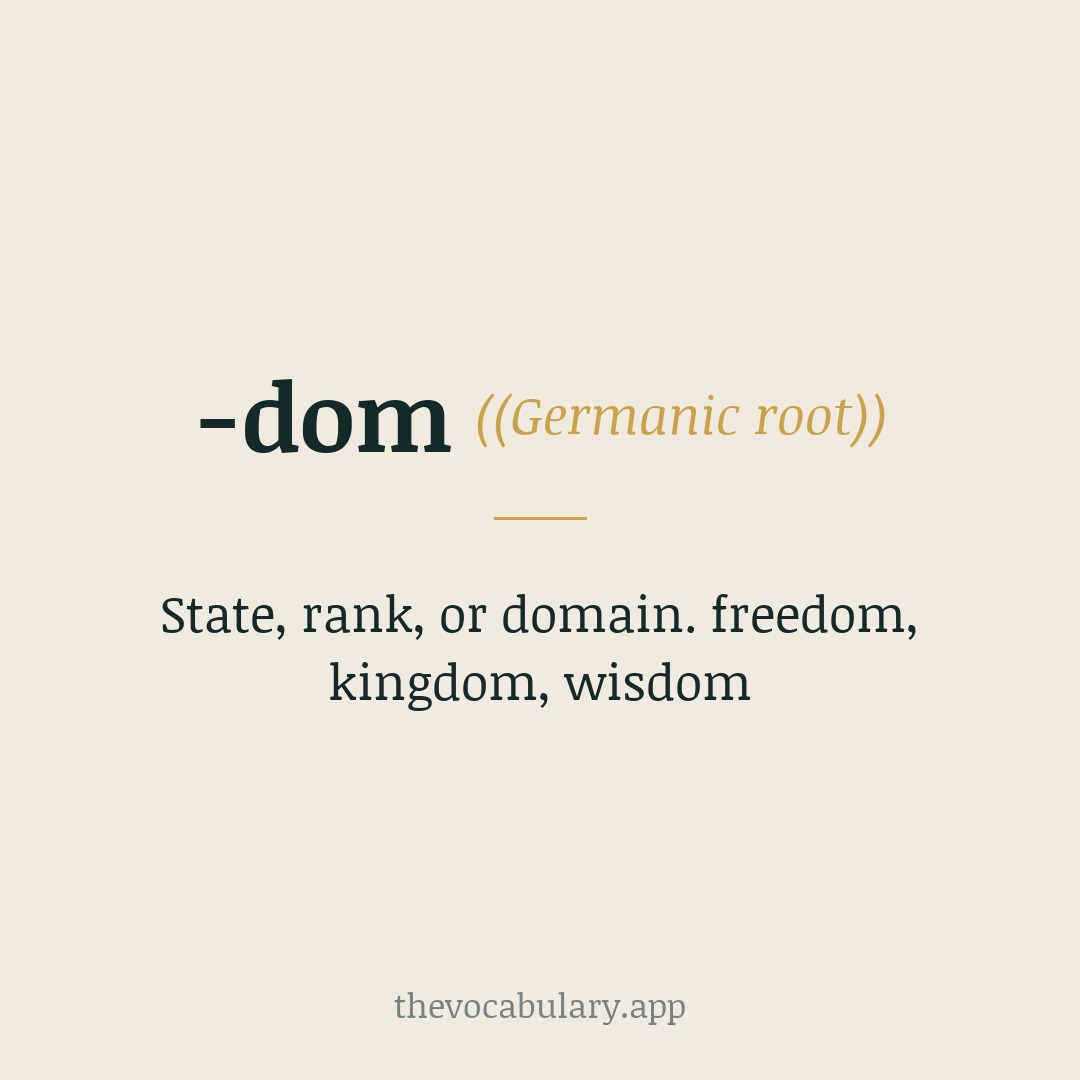
1. -dom — a state, rank, or realm. From Old English -dom, a cousin of the word doom in its old sense of judgment. Seen in freedom, kingdom, wisdom.
2. -hood — a condition or stage of life. From Old English -had, "state or rank." Seen in childhood, neighborhood, brotherhood.
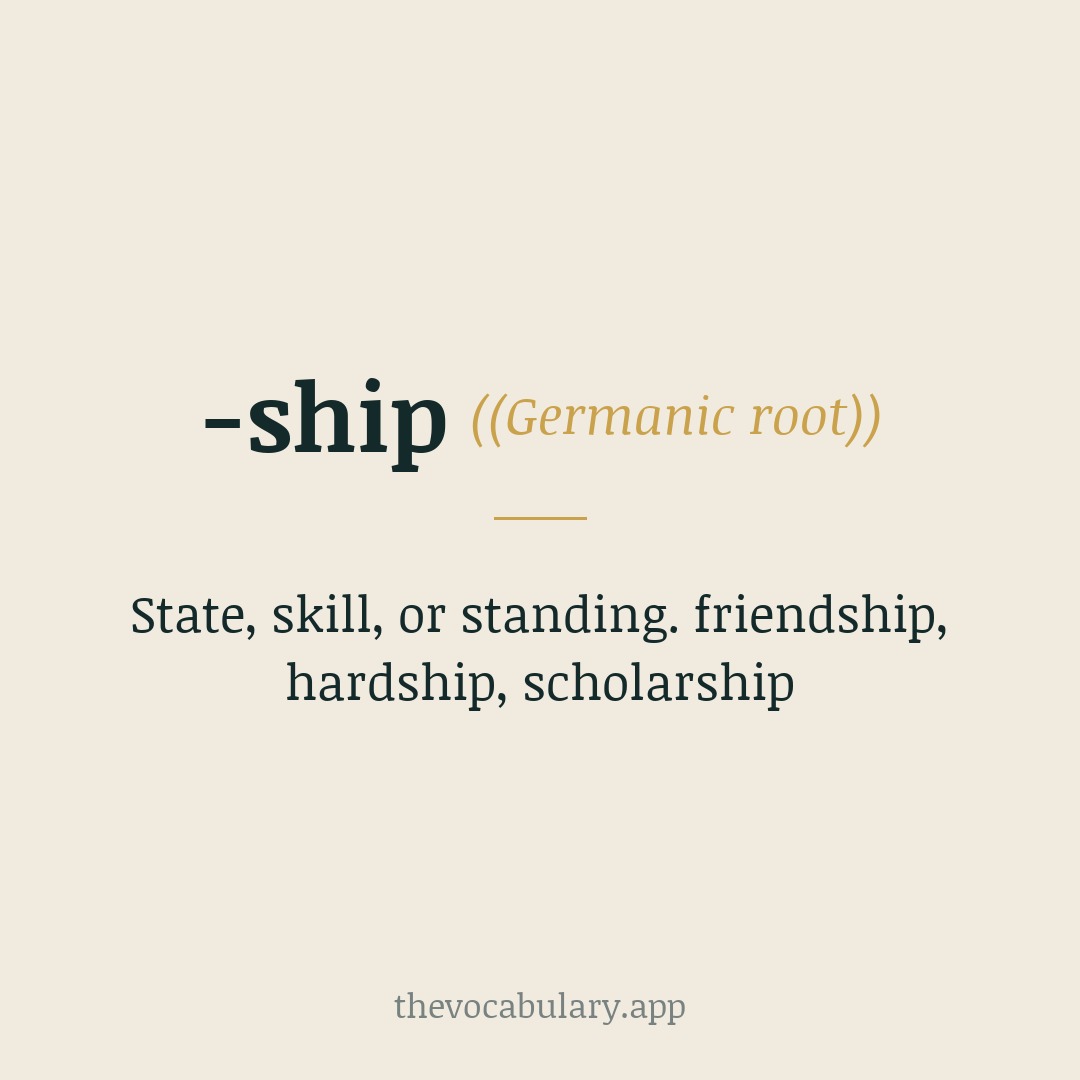
3. -ship — a state, skill, or standing. From Old English -scipe, related to shape — the shape a thing is in. Seen in friendship, hardship, scholarship.
4. -ness — a quality or state of being. From Old English -nes, the workhorse ending for turning an adjective into a noun. Seen in kindness, darkness, happiness.
Endings that describe and make
5. -less — free of, without. From Old English -leas, "devoid of." Seen in fearless, homeless, endless.
6. -some — tending toward, full of. From Old English -sum, "characterized by." Seen in handsome, tiresome, wholesome.
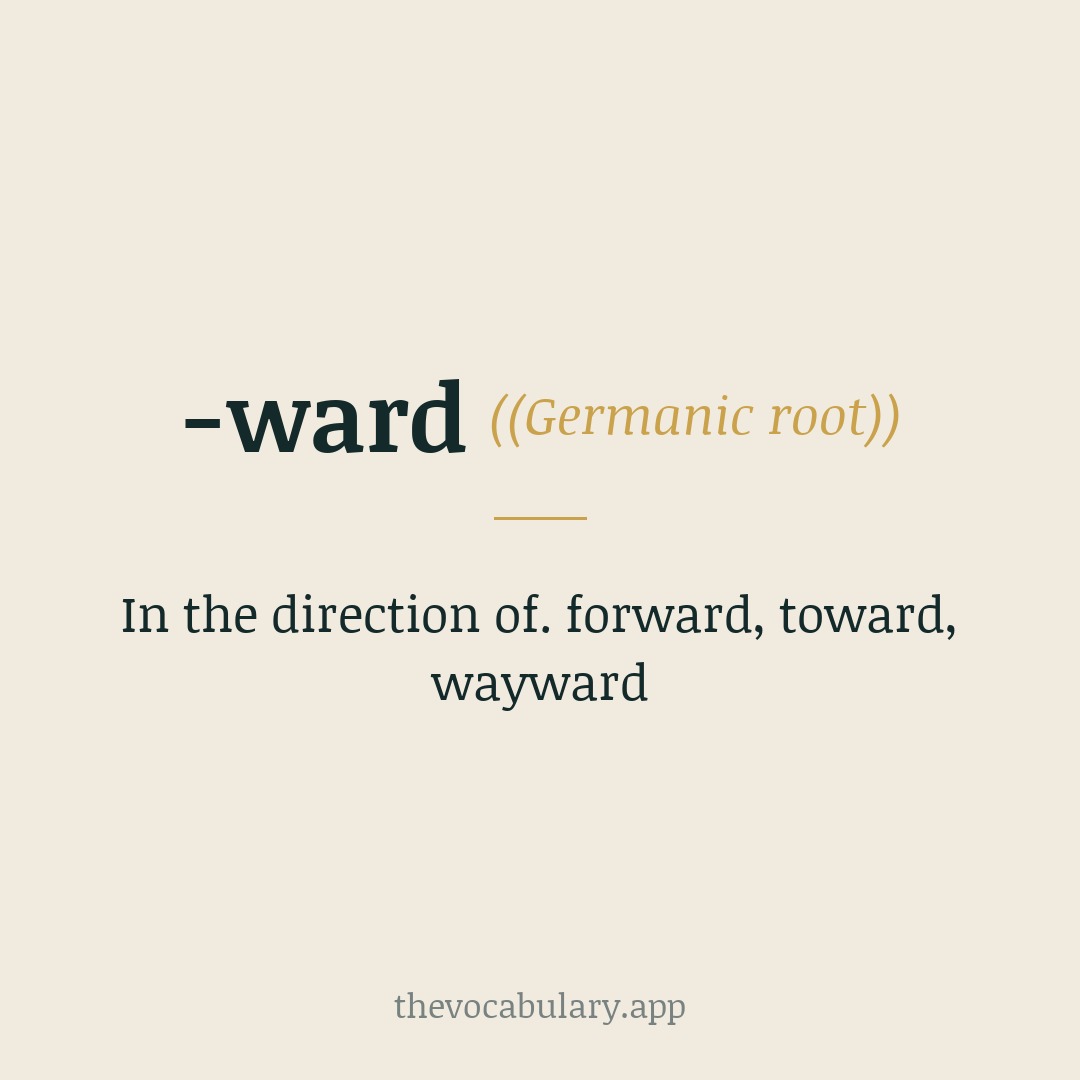
7. -ward — turned in the direction of. From Old English -weard, "facing toward." Seen in forward, toward, wayward.
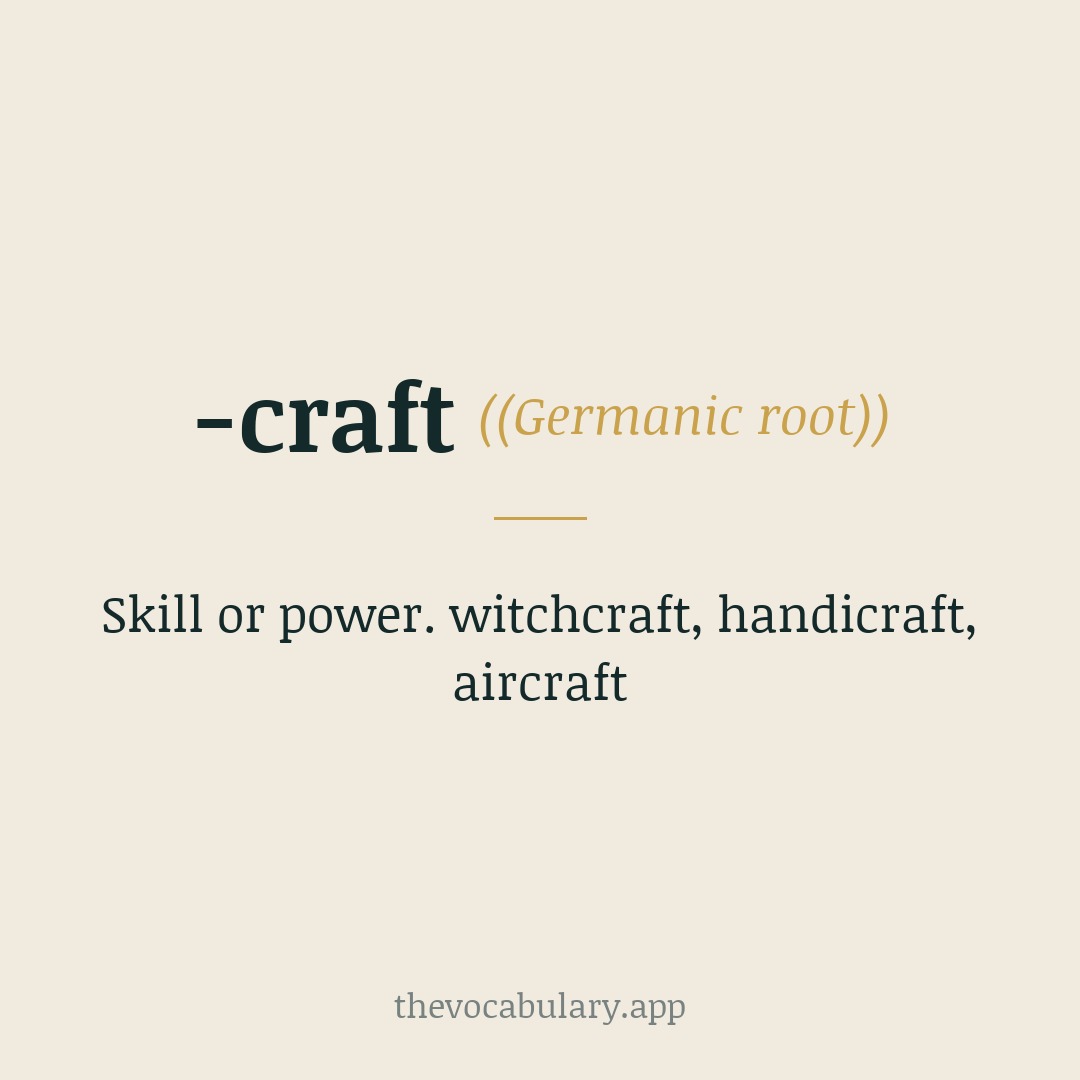
8. -craft — skill, strength, or power. From Old English cræft, which meant might as well as know-how. Seen in witchcraft, handicraft, aircraft.
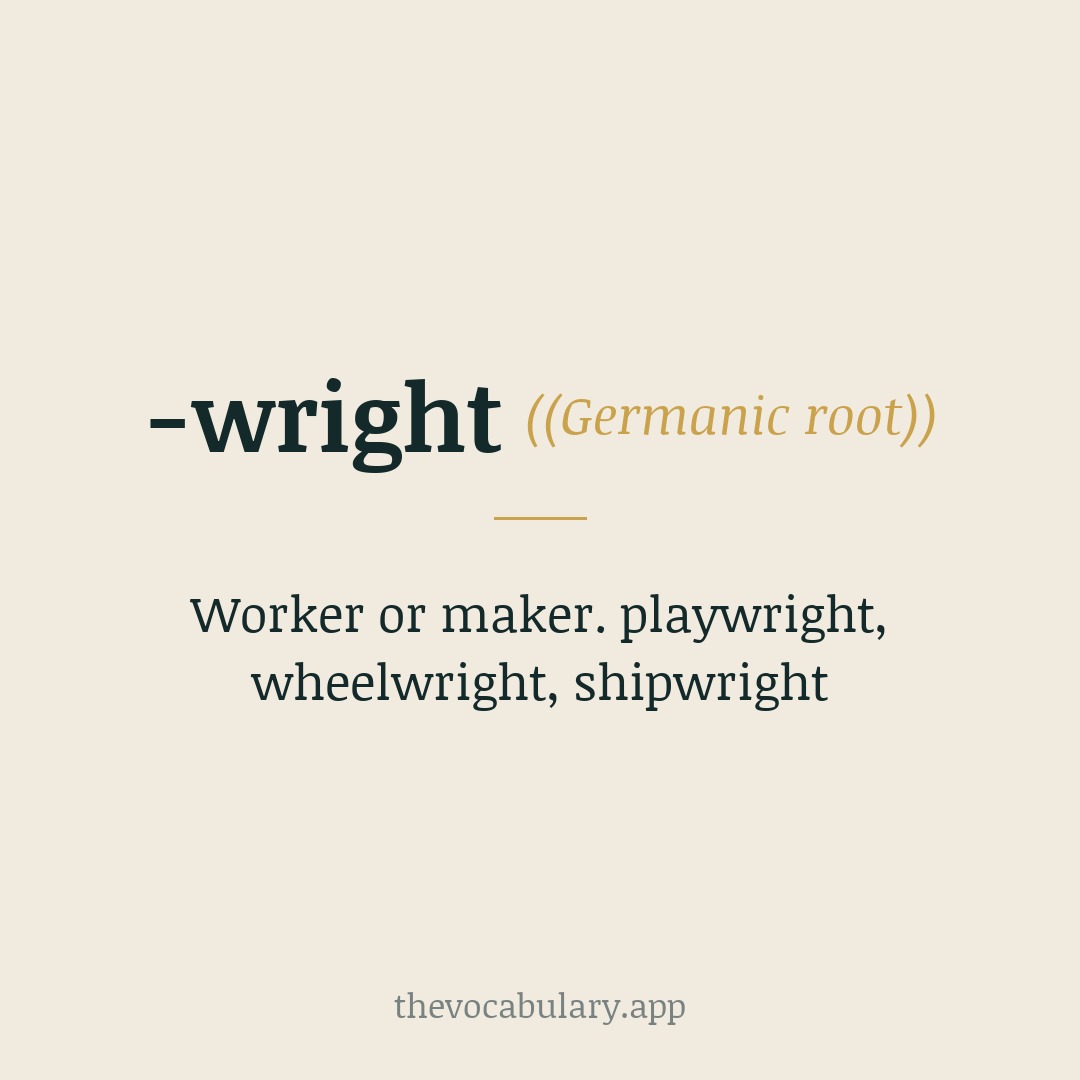
9. -wright — a worker or maker. From Old English wyrhta, kin to work and wrought — someone who works a material. Seen in playwright, wheelwright, shipwright.
Prefixes that flip and point
10. un- — not, or the reverse of. From Old English un-, the most productive negating prefix in the language. Seen in undo, unfold, unhappy.
11. be- — makes a verb act on something, or adds force. From Old English be-, worn down from by. Seen in bewitch, befriend, belittle.
12. fore- — before, in front, ahead of time. From Old English fore, "before." Seen in foresee, foretell, forecast.
The bones of English are Germanic. The Vocabulary app shows you the roots behind everyday words, one a day.
Get The Vocabulary app