15 Latin Roots That Explain Thousands of English Words
Learn a new word every day
Free on iOS & Android

Learn one Latin root and unlock a whole family of English words. Here are 15 of the most productive Latin roots, each with real example words built on top of it, so unfamiliar words start decoding themselves.

15 Latin Roots That Explain Thousands of English Words
Roughly 60% of English words carry a Latin ancestor, and once you learn to spot the recurring pieces, the language stops feeling like an endless list to memorize. A single Latin root is a tiny meaning-machine: learn it once, and you suddenly hold the key to a whole family of English words — some you already know, and many you have never seen before.
Take the root port, meaning “to carry.” It quietly powers transport, export, portable, and import. Learn the root, and each of those words explains itself. Below are 15 of the most productive Latin roots in English, grouped by what they do, each with three or four real words built on top of it.
Roots of seeing, hearing, and speaking
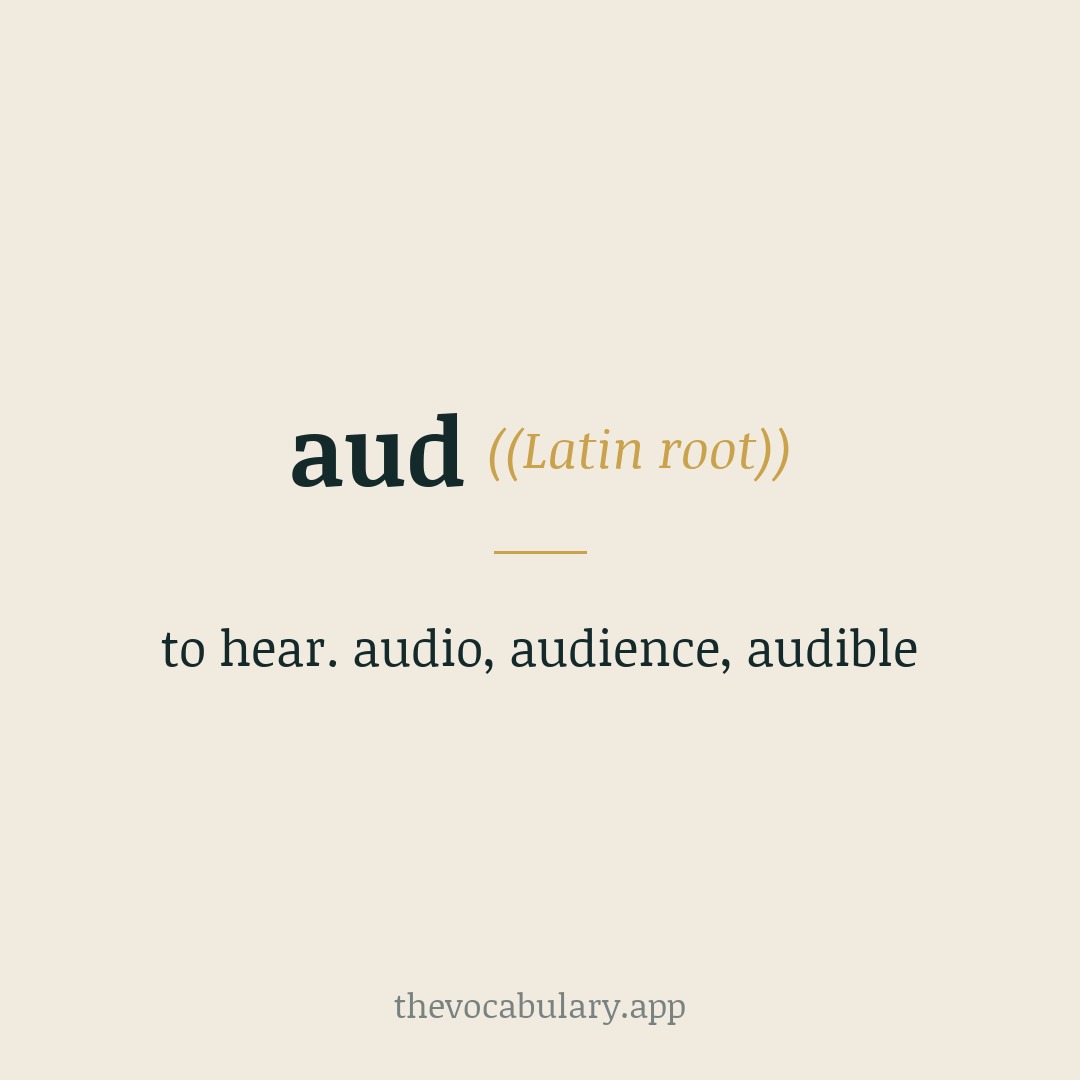
1. aud — to hear. Seen in audio (recorded sound), audience (those who listen), audible (able to be heard), auditorium (a hall built for listening).
2. vid / vis — to see. Seen in video (a visual recording), vision (the sense of sight), visible (able to be seen), evident (plainly seen).
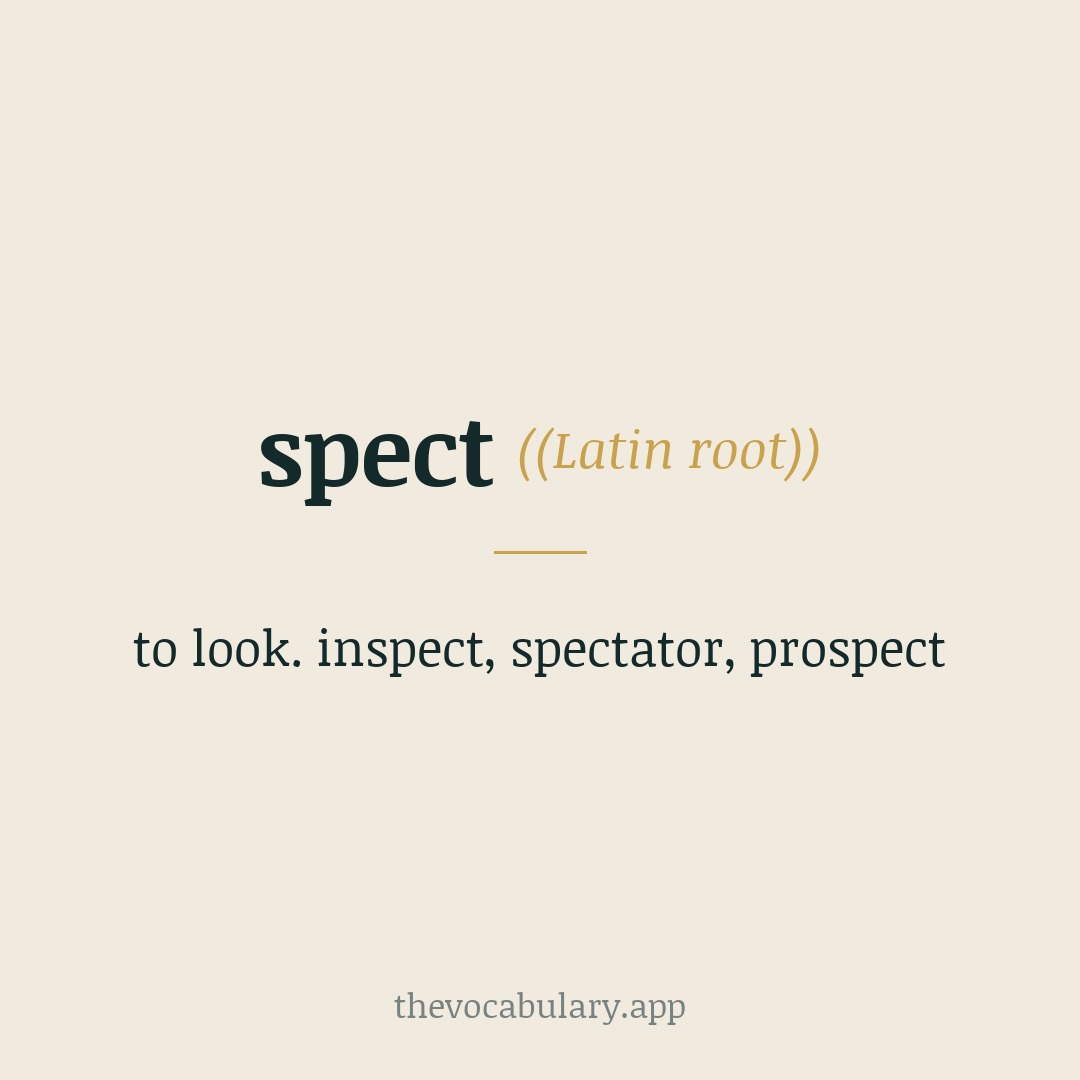
3. spect — to look, to watch. Seen in inspect (look into), spectator (one who watches), spectacle (something to look at), prospect (a looking forward).
4. dict — to say, to speak. Seen in predict (say beforehand), dictate (say aloud for another to write), verdict (a true saying), contradict (speak against).

5. scrib / script — to write. Seen in describe (write down), manuscript (written by hand), transcript (a written copy), inscription (something written on a surface).
6. voc — to call, voice. Seen in vocal (relating to the voice), advocate (one who calls out in support), evoke (call forth), vocation (a calling).
Roots of moving and making
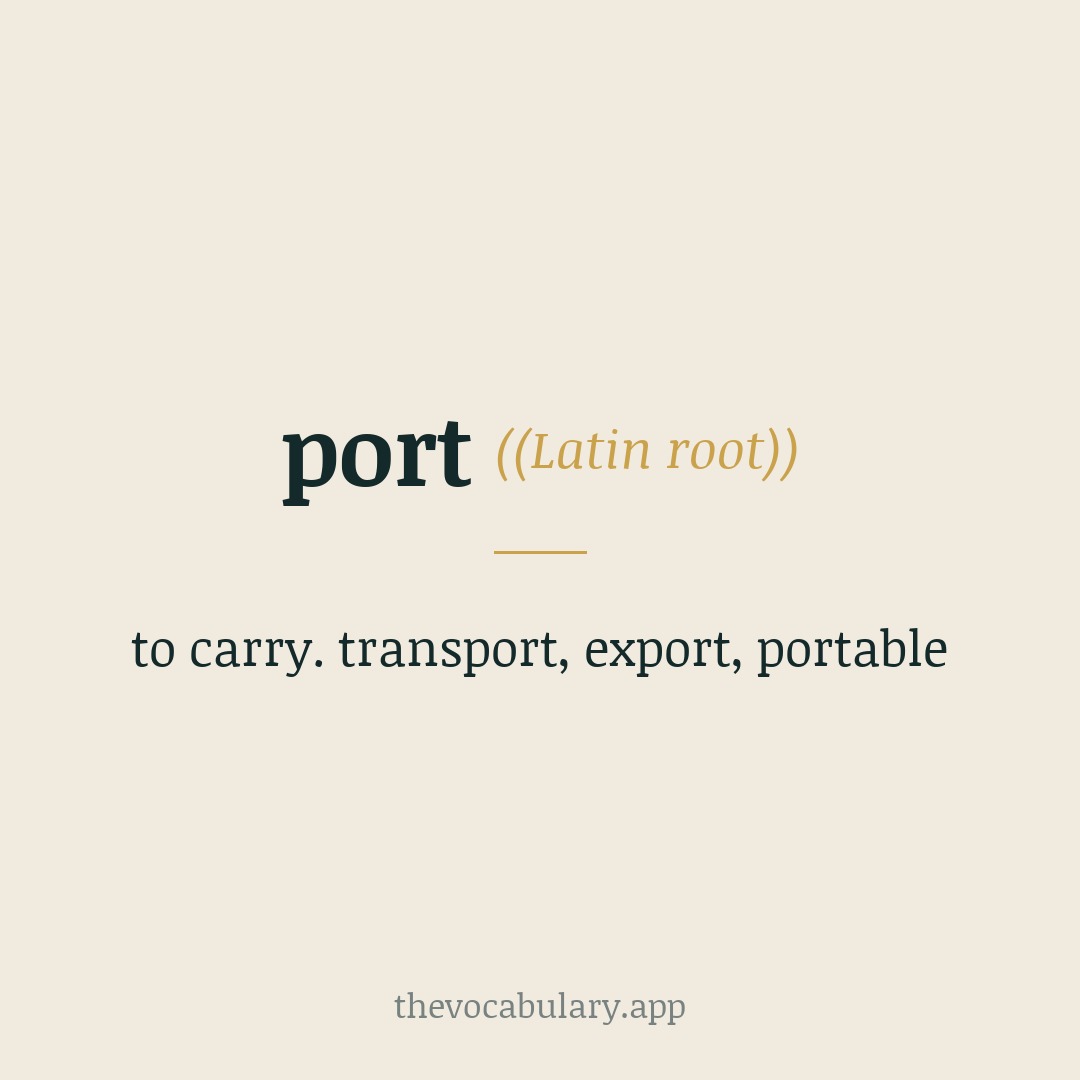
7. port — to carry. Seen in transport (carry across), export (carry out), portable (able to be carried), import (carry in).
8. ject — to throw. Seen in eject (throw out), inject (throw in), reject (throw back), projectile (something thrown forward).
9. tract — to pull, to drag. Seen in attract (pull toward), extract (pull out), tractor (a machine that pulls), retract (pull back).
10. struct — to build. Seen in construct (build together), structure (something built), destruction (the un-building of something), instruct (build knowledge into someone).
11. rupt — to break. Seen in interrupt (break in between), erupt (break out), rupture (a breaking), bankrupt (from the Italian for a “broken bench”).
12. man / manu — hand. Seen in manual (done by hand), manufacture (originally, to make by hand), manuscript (written by hand), manicure (care of the hands).
Roots of light and belief
13. bene — good, well. Seen in benefit (a good deed or advantage), benevolent (wishing good to others), benefactor (one who does good), benign (gentle and kindly).
14. cred — to believe. Seen in credible (believable), incredible (not believable), credit (belief or trust extended to you), credentials (proof that earns belief).
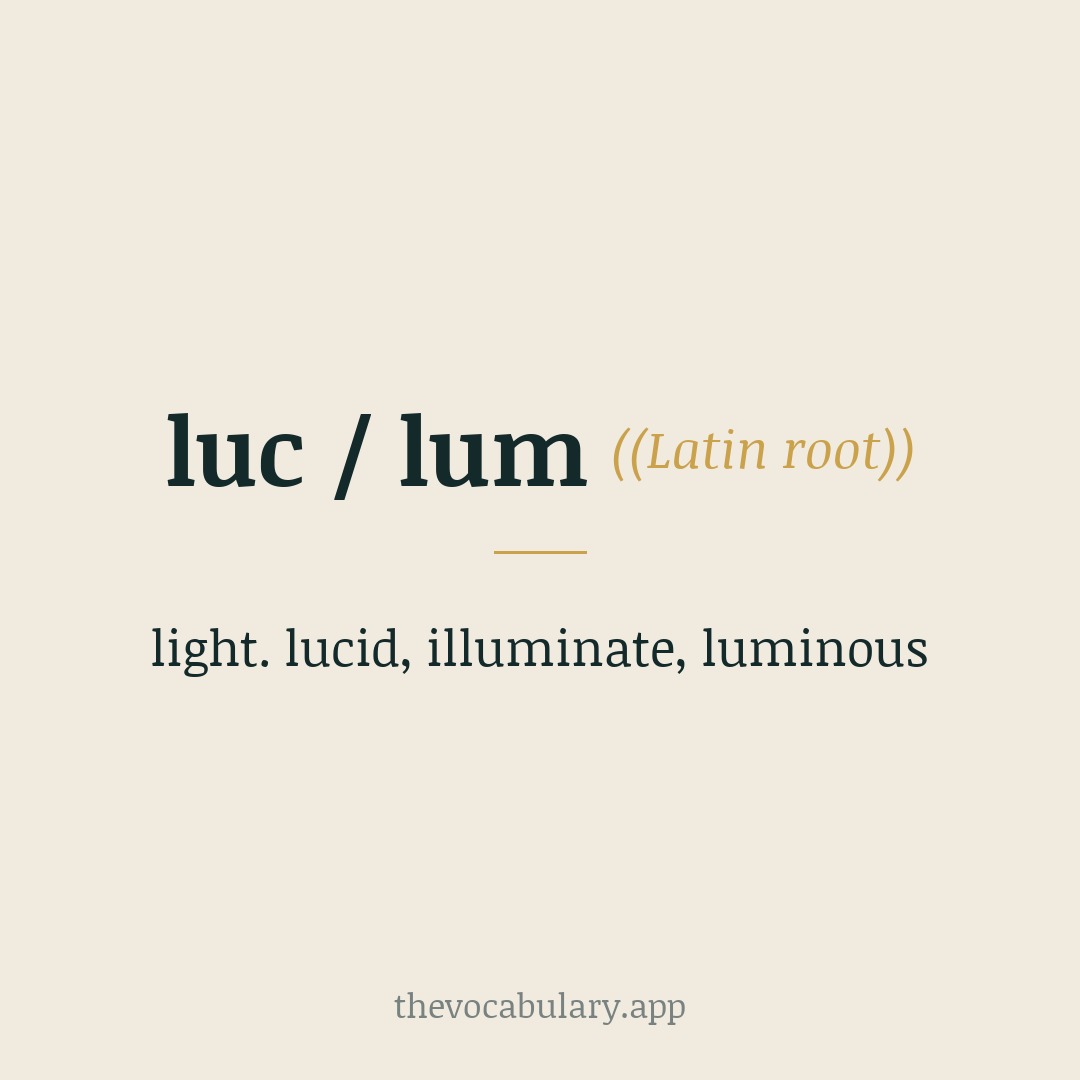
15. luc / lum — light. Seen in lucid (clear and bright), illuminate (to light up), luminous (full of light), translucent (letting light through).
How to use roots
You do not need to memorize all fifteen at once. The next time you meet an unfamiliar word, slow down and look for a piece you recognize. Spot spect and you know it involves looking; spot cred and belief is somewhere inside; spot rupt and something is breaking. A root will not always give you the exact definition, but it points you in the right direction — and over time, new words start to decode themselves.
See the Latin hiding inside English. The Vocabulary app teaches you the roots behind the words, so new words start decoding themselves.
Get The Vocabulary app