How to Learn 10 New Words a Day (and Actually Remember Them)
Learn a new word every day
Free on iOS & Android

Learning new words is easy. Remembering them is the hard part. Here's a simple, science-backed daily system for adding 10 words a day to your vocabulary — and making them stick for good.

How to Learn 10 New Words a Day (and Actually Remember Them)
Learning a new word takes about thirty seconds. Remembering it a week later? That's where almost everyone gets stuck. You highlight a word, nod along, feel smarter for an afternoon — and by Friday it's gone.
The fix isn't more willpower. It's a better system. Here's a simple, repeatable routine for learning 10 new words a day and making them stick — in about ten minutes.
Why most vocabulary learning fails
The problem with memorizing a list of definitions is that your brain treats it as trivia: isolated, meaningless, and instantly forgettable. Memory is built from connection and repetition, not from staring harder. Every step below is designed to give new words both.
The 10-words-a-day system
1. Pick 10 words with something in common. Ten words on a theme — emotions, work, one shared root — are far easier to remember than ten random ones, because each word reinforces the others.
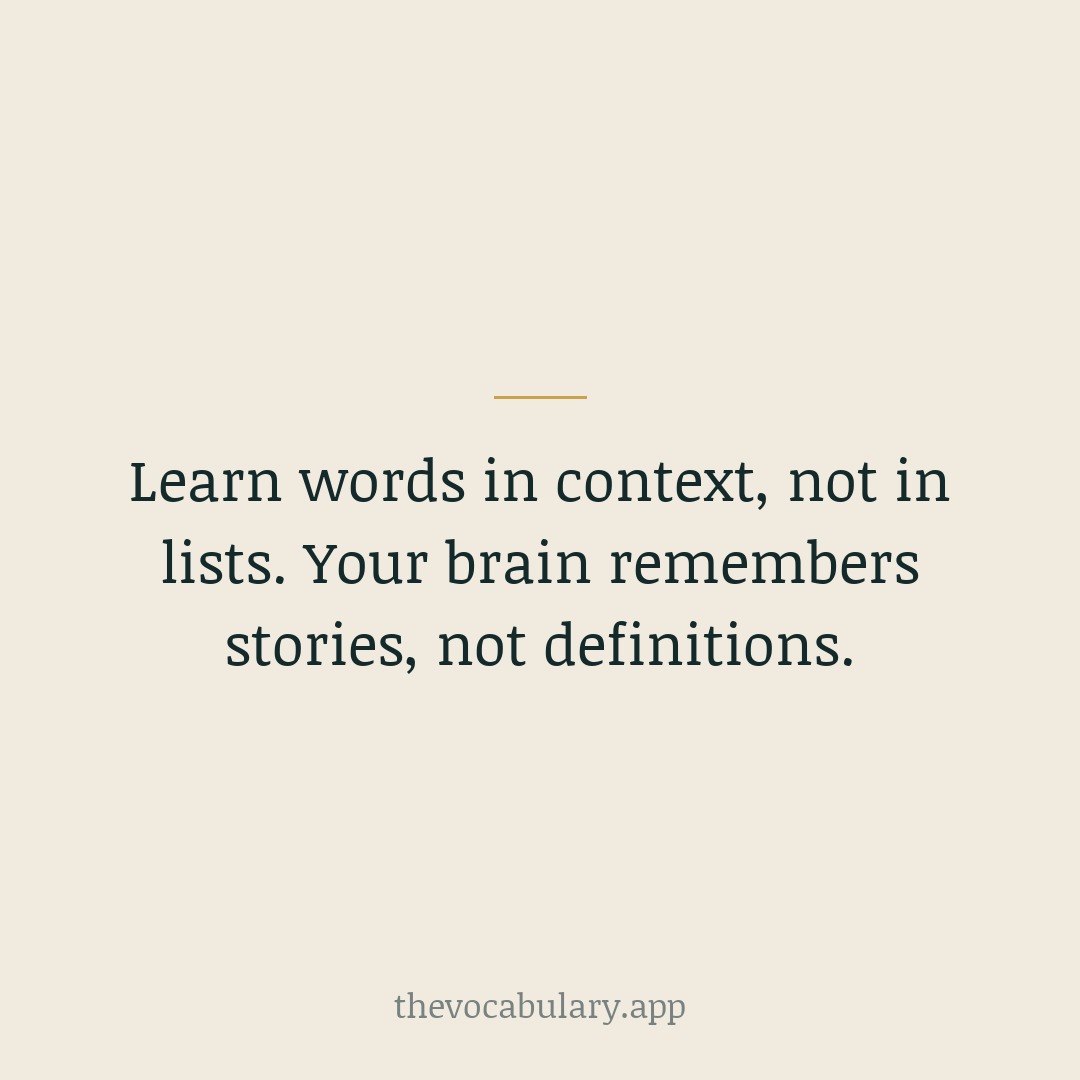
2. Learn each word in context. Don't just read the definition — read the word inside a real sentence. Context tells your brain not only what a word means, but when and how to use it. A word in a story sticks; a word on a flashcard fades.
3. Say it out loud. Reading is passive; speaking is active. Saying a word — even once, even quietly — forces your brain to encode its sound and shape, which makes it far easier to recall later.
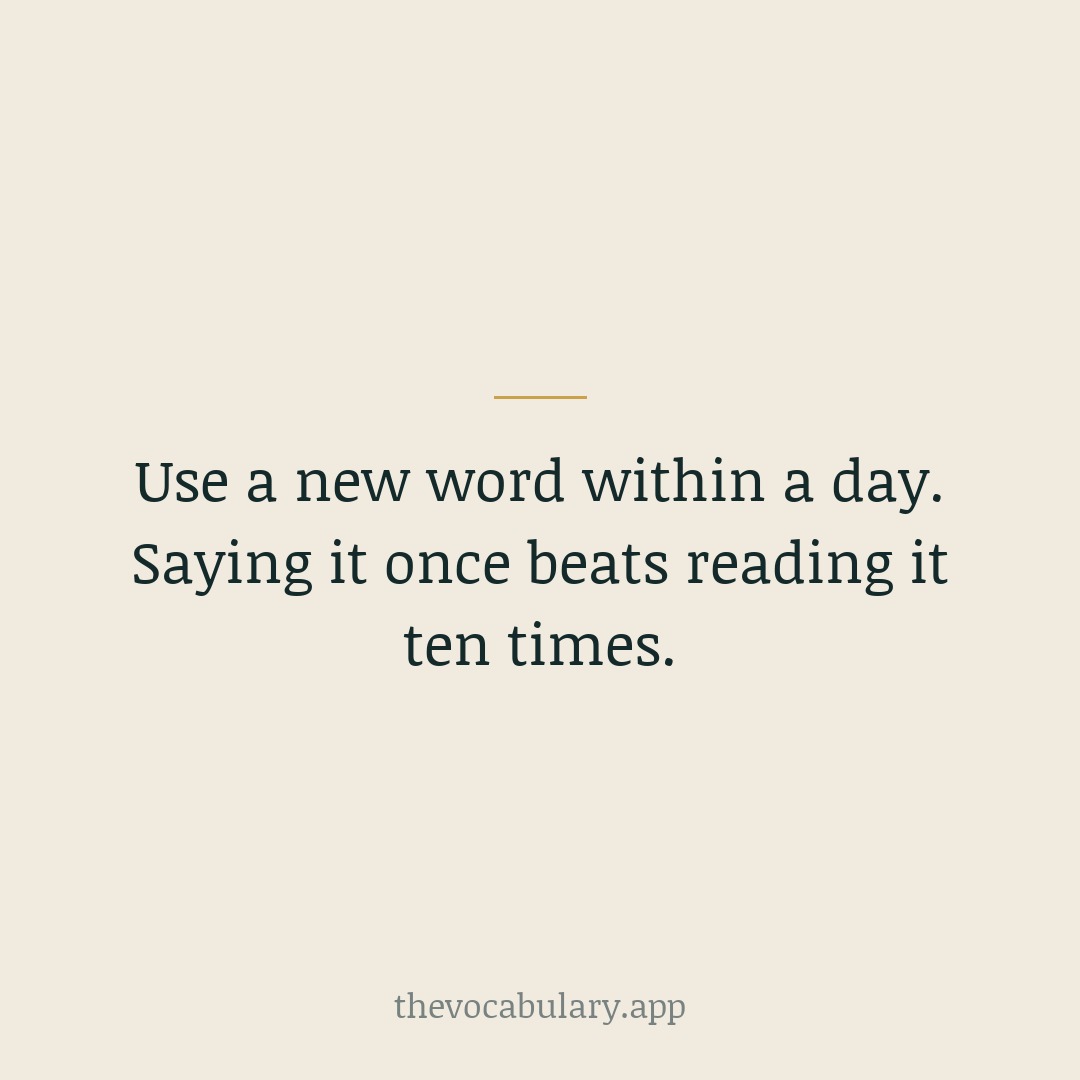
4. Use each new word within a day. Drop it into a text, an email, a conversation, or a single sentence you write for yourself. The first real use is the moment a word moves from "recognized" to "yours."
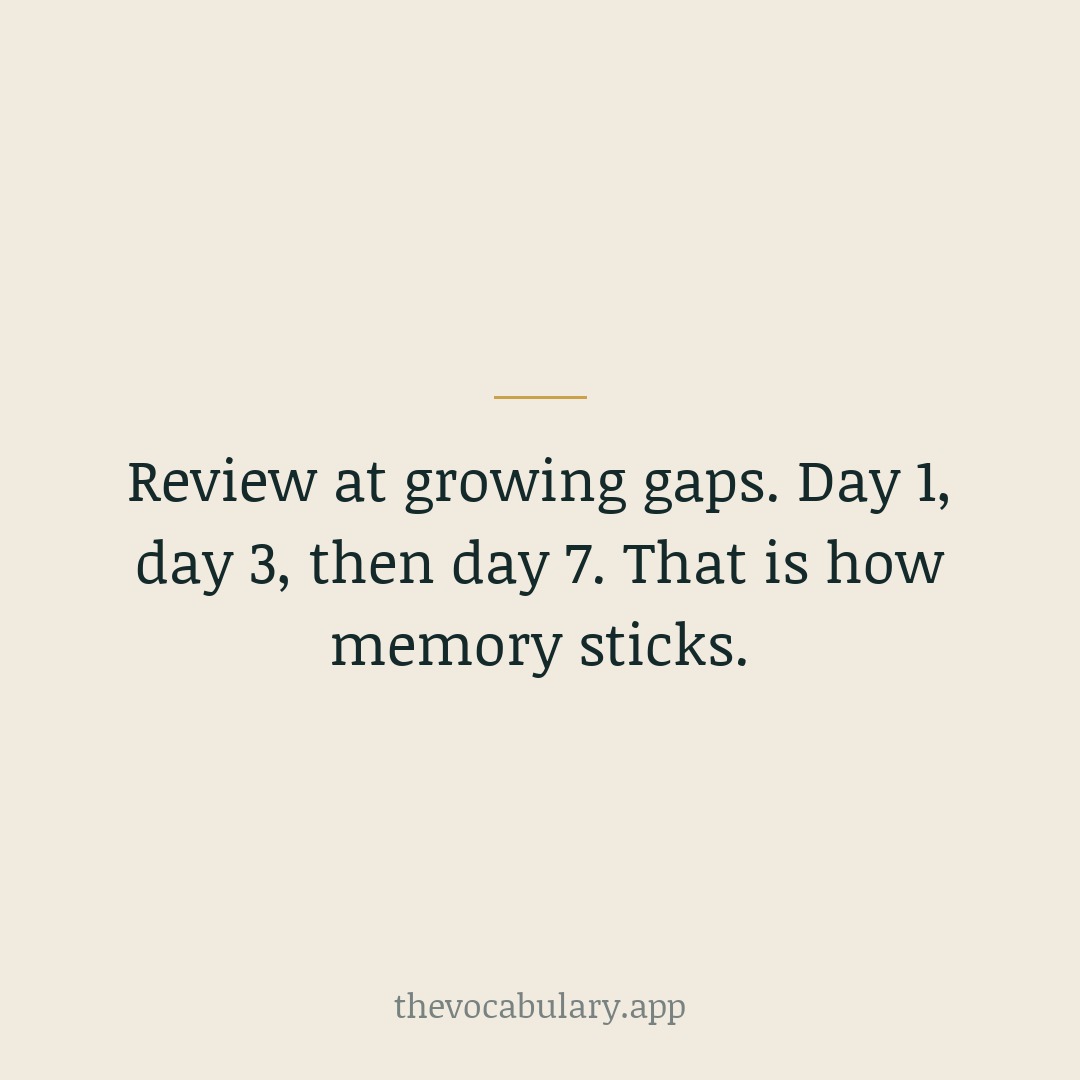
5. Review at growing intervals. This is the single most powerful trick in memory science, called spaced repetition. Review your words on day 1, day 3, then day 7. Each time you recall a word just as you're about to forget it, the memory gets stronger and lasts longer.
6. Connect new words to roots you already know. If you know that bene means "good," then benevolent, benefit, and benediction arrive half-learned. Roots turn every new word into a hook for the next one.
7. Stop at 10. Ten words a day is about 3,600 a year — more than enough to transform how you speak and write. Trying to cram 50 just guarantees you'll remember none. Consistency beats intensity every single time.
Make it a daily habit
The learners who build huge vocabularies aren't smarter — they just show up for ten minutes a day. Attach your word practice to something you already do (morning coffee, the commute, before bed) and let the streak do the work.
Let the system do the work. The Vocabulary app serves you 10 new words a day with context, pronunciation, and built-in spaced repetition — so they actually stick.
Get The Vocabulary app