15 Medical Words Explained by Their Greek and Latin Roots
Learn a new word every day
Free on iOS & Android

Medical vocabulary looks intimidating until you see the roots. Here are 15 medical words broken into their Greek and Latin parts so they finally make sense.

Medical words look impossible until you realise they are built like Lego. Almost every one is assembled from a handful of Greek and Latin roots, so learning the parts lets you decode words you have never seen before.
Here are 15 medical words taken apart into their roots. Learn that -ology is 'study of', derma is 'skin', and gaster is 'stomach', and dozens of terms suddenly explain themselves.
Why learn the roots instead of the words?
Because the roots repeat. Once you know gaster (stomach), enteron (intestine), and -logy (study of), gastroenterology is not a wall of letters — it is 'the study of the stomach and intestines'. The same roots then unlock hundreds of other terms.
This is the fastest way to grow a technical vocabulary, and it is exactly how the MonkeyTaps app teaches words: learn one root, unlock a whole family. The words below are drawn from the app's database and split into the parts that make them.
15 medical words and their roots
1. gastroenterology
“The branch of medicine that deals with disorders and conditions of the digestive system” — From Greek ‘gaster’ (stomach) + ‘enteron’ (intestine) + ‘-logy’ (study of), coined ~1904.
2. xeroderma
“Excessive dryness of the skin” — From Greek 'xeros' (dry) and 'derma' (skin).
3. encephalon

“The brain” — New Latin, from Greek enkephalos.
4. pulmonology
“The branch of medicine concerned with the respiratory system and its diseases” — From Latin 'pulmon-' (pulmo) and English '-ologist', as in cardiologist.
5. borborygmus
“A rumbling or gurgling noise in the intestines” — Borrowed from New Latin, from Greek borborygmos, from borboryzein meaning 'to rumble'.
6. etiology
“The cause, set of causes, or manner of causation of a disease or condition” — From Medieval Latin aetiologia meaning 'statement of causes', from Greek aitiologia, from aitia meaning 'cause'.
7. syncope
“Temporary loss of consciousness caused by a fall in blood pressure” — From Late Latin and Greek: 'synkopē' ('cutting short'), derived from synkoptein and syn- + koptein.
8. prophylactic
“Intended to prevent disease” — Borrowed from Med. Latin prophylacticus and Greek prophylaktikós, from prophylássein meaning 'to take precautions'.
9. immunity

“Resistance to a particular infection or toxin” — From Latin immunitas, from immunis meaning 'exempt from public service'; formed of in- (non-) + -munis (from munia meaning 'services').
10. exsanguinate

“To drain of blood” — From Latin 'exsanguinatus' meaning 'drained of blood'.
11. zoonosis
“A disease that can be transmitted to humans from animals” — Probably alteration by conformation to -osis from French zoonose, from zoo- and Greek nósos meaning 'disease'.
12. polyuria
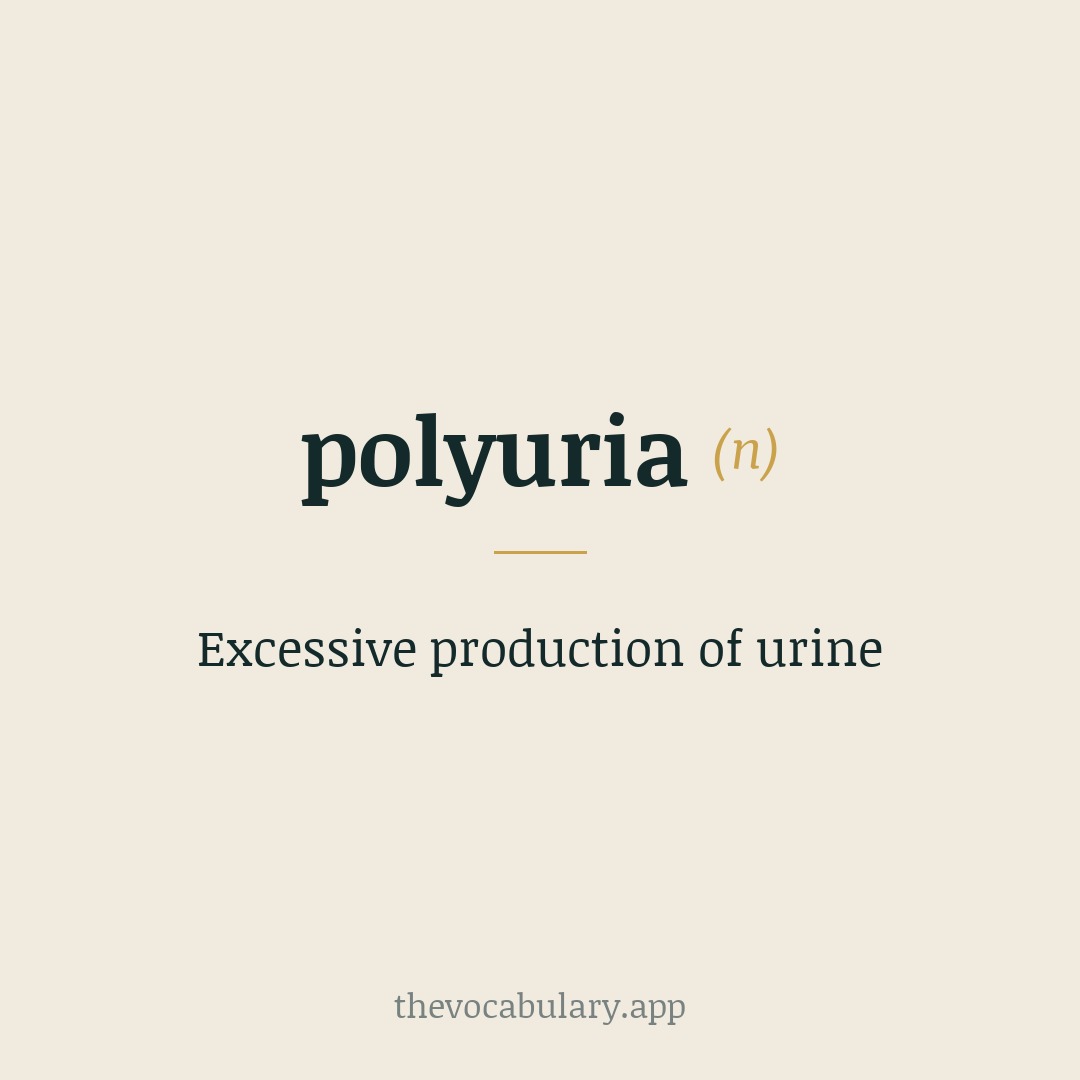
“Excessive production of urine” — From New Latin.
13. bacteremia
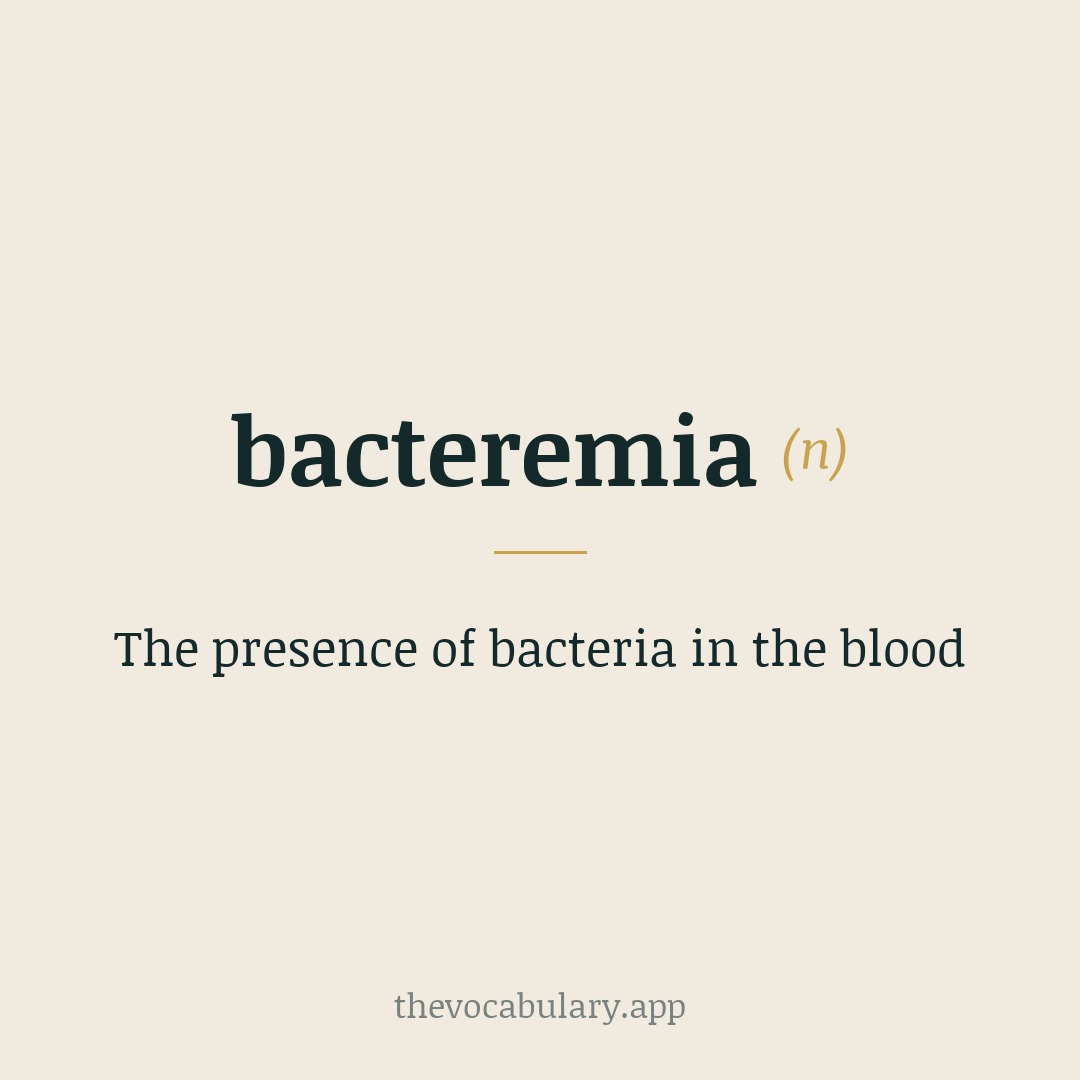
“The presence of bacteria in the blood” — From New Latin, alteration of bacteriemia, from bacteri- + -emia.
14. ossify

“To become rigid, harden” — From Latin oss-, os + English -ify.
15. perfusion

“The passage of fluid through the circulatory or lymphatic system to an organ or a tissue” — From Latin 'perfundere' meaning 'to pour through'.
Frequently asked questions
How do you decode a medical word?
Break it into its roots. Most medical terms combine a Greek or Latin root (the body part or condition) with a prefix and suffix. Xeroderma is xeros (dry) + derma (skin), so it means dry skin.
What does '-ology' mean in medical words?
-ology comes from Greek -logia and means 'the study of'. Attached to a body-part root it names a medical specialty — pulmonology is the study of the lungs (pulmo).
Are medical terms Greek or Latin?
Both. Anatomy leans Latin (pulmo, lung) and clinical terms lean Greek (enteron, intestine). Many words mix the two, which is why the roots are worth learning on their own.
What is the fastest way to learn medical vocabulary?
Learn the recurring roots rather than memorising whole words. A short daily habit of root practice, like the one in the MonkeyTaps app, compounds quickly because each root unlocks many terms.
