15 Words That Sound Exactly Like What They Mean
Learn a new word every day
Free on iOS & Android

Some words are just the sound they describe. Here are 15 onomatopoeic English words — from twang to harrumph — and where they came from.
Some words are simply the noise they name. Say twang, plop, or harrumph out loud and the meaning is already in your mouth. Linguists call these words onomatopoeic — imitative in origin.
Here are 15 English words that sound exactly like what they mean. Because the sound and the sense line up, they are some of the easiest and most fun words to remember.
What is onomatopoeia?
Onomatopoeia is when a word imitates the sound it refers to. The word itself comes from Greek onomatopoiia, literally 'name-making'. Because these words are built from sound rather than borrowed from another language, they often appear in the record as simply 'imitative in origin'.
They are worth collecting for more than fun. Imitative words are vivid and precise — a chirp is not a twang is not a plop — and reaching for the exact sound word is a quick way to make your writing sharper.
15 words that sound like their meaning
1. twang
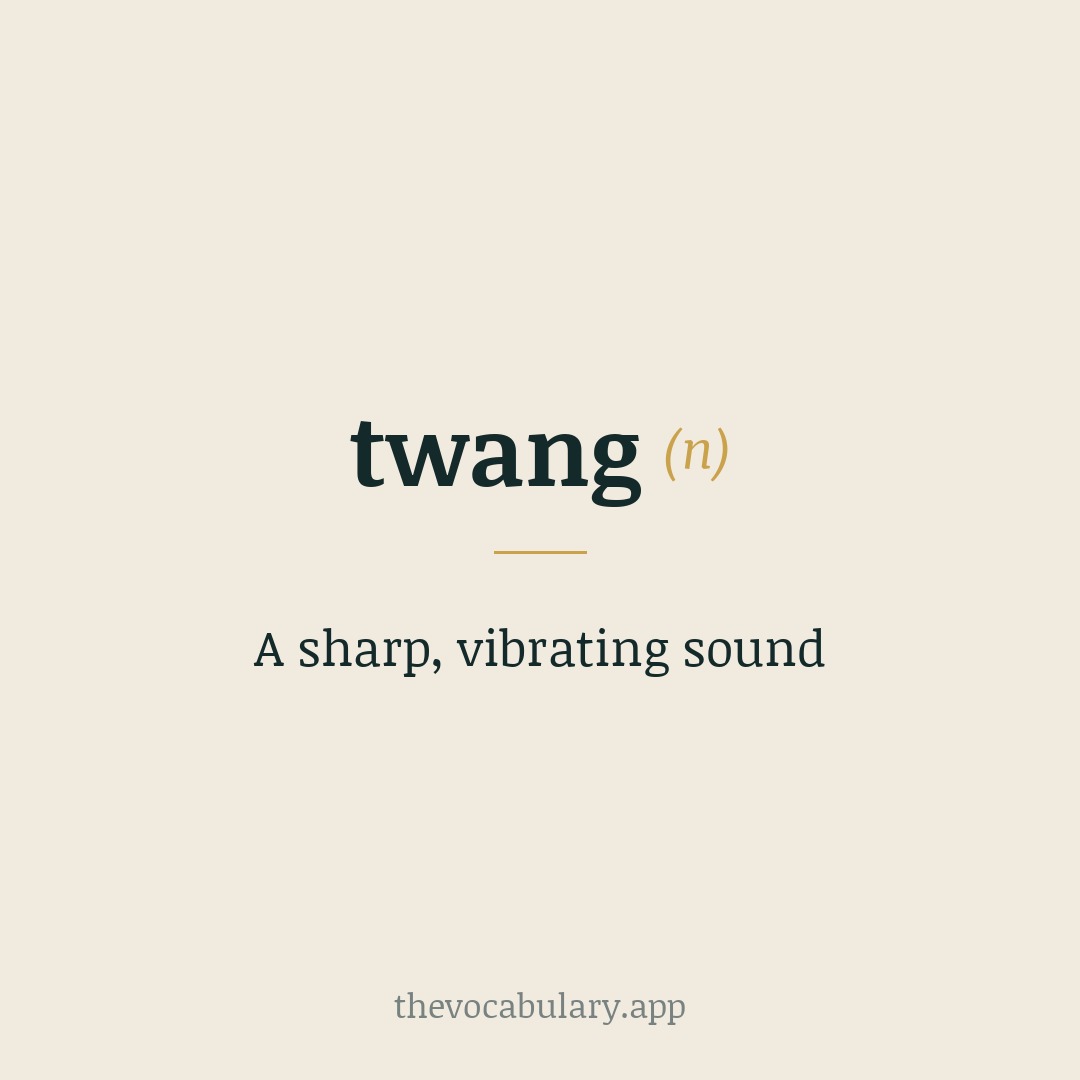
“A sharp, vibrating sound” — Imitative origin, first recorded in the 1550s.
2. plop
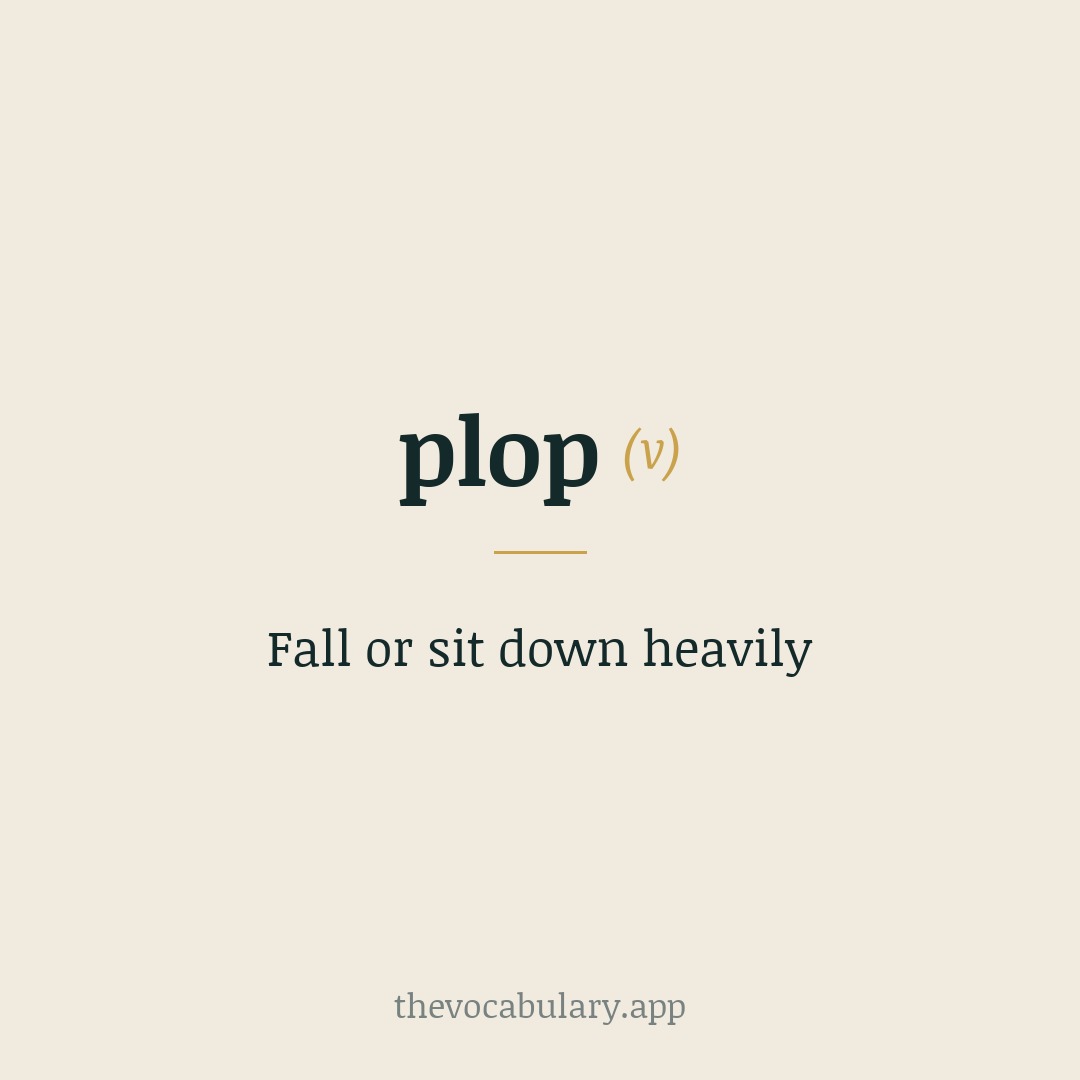
“Fall or sit down heavily” — Imitative.
3. chirp
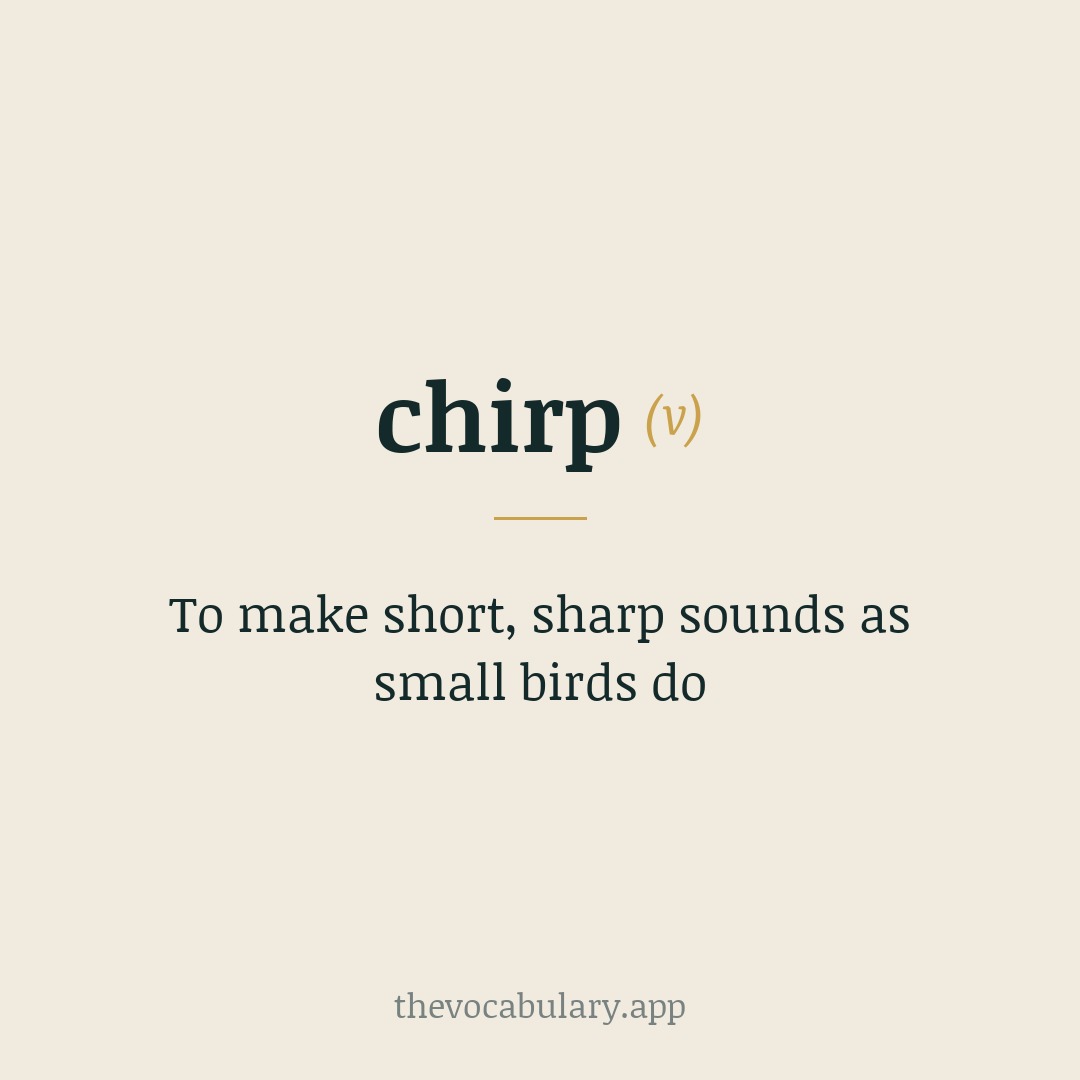
“To make short, sharp sounds as small birds do” — From imitative.
4. harrumph
“To express dissatisfaction or disapproval” — Imitative in origin; first attested mid-20th-century in US dictionaries (c.1935–40).
5. mewl
“To cry softly like a kitten” — From imitative.
6. dither
“To be indecisive” — Derived from variant didder, from Middle English dideren ('to tremble, shiver') of imitative origin.
7. zowie
“An expression of excitement or surprise” — Imitative of the sound of a speeding vehicle.
8. oompah
“A style of music with a strong rhythm” — Imitative origin, first used c.1877, echoing the oom-pah sound.
9. quaff
“To drink quickly and eagerly” — First recorded 1515–25; origin uncertain, perhaps imitative.
10. knack
“An acquired or natural skill at performing a task” — From Middle English knak “trick, device,” perhaps imitative of sharp sound.
11. jumble
“A confused mixture of things” — Origin uncertain; possibly imitative, first recorded in the 1520s.
12. dandle
“To move a child up and down playfully” — First attested in the 1520s; likely imitative, akin to French dandiner or Italian dondolare.
13. gallimaufry
“A confused jumble or medley of things” — Borrowed from Middle French galimafree ('stew of meats') and Middle Dutch moffelen/maffelen; blend of galer and mafrer (imitative origin).
14. pouffe
“A soft cushion you can sit on” — From French pouf, meaning 'something inflated', of imitative origin.
15. cachinnate
“To laugh loudly or immoderately” — From Latin cachinnatus, past participle of cachinnare, of imitative origin.
Frequently asked questions
What is a word that sounds like its meaning called?
It is called onomatopoeia (the word) or onomatopoeic (the adjective). The term comes from Greek for 'name-making' — the word imitates the sound it describes.
What are some examples of onomatopoeia?
Everyday examples include buzz, hiss, splash, twang, plop, and chirp. Each word imitates the noise it names.
Why are onomatopoeic words easy to remember?
Because the sound and the meaning match, so the word gives you a built-in clue. That overlap is one reason these words stick with almost no effort.
Do onomatopoeic words have etymologies?
Often the etymology is simply 'imitative' — the word was invented to echo a sound rather than borrowed. A few, like cachinnate (to laugh loudly), come from Latin words that were themselves imitative.
