18 Japanese Words That English Borrowed
Learn a new word every day
Free on iOS & Android

Eighteen Japanese words English borrowed — wabi-sabi, ikigai, tsundoku, umami and more — each with the meaning behind it.
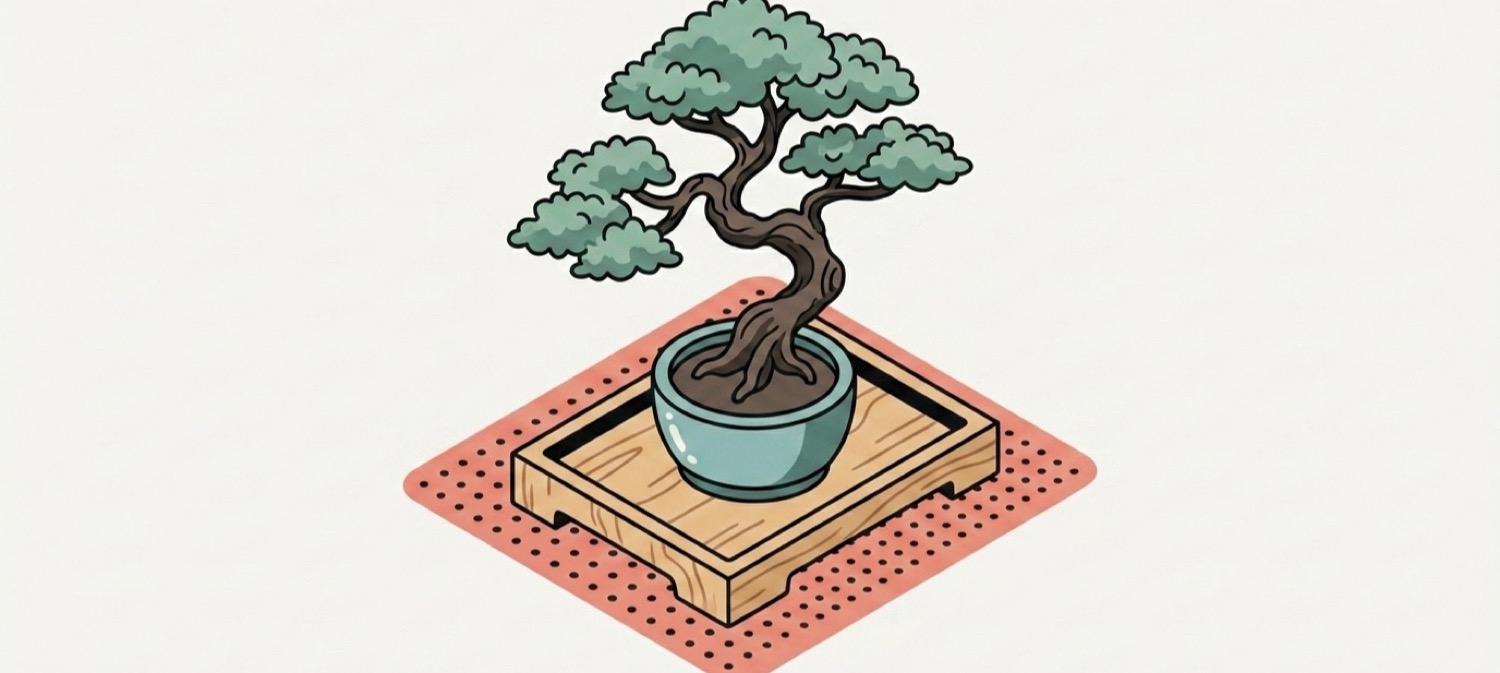
Japanese has given English a very particular kind of gift: words for feelings, aesthetics, and experiences that English never had a single term for. When a language names something precisely — the sunlight through leaves, the beauty of imperfection — other languages tend to just borrow the word.
Here are 18 Japanese words that English borrowed, from quiet philosophical ideas to the food on your plate. Several have no real English equivalent, which is exactly why they stuck.
Why does English borrow Japanese words?
Two forces did most of the work. One is aesthetics and philosophy: Japanese has finely tuned words for states English speakers feel but cannot easily name, so we adopt the originals. The other is food — as Japanese cuisine spread worldwide, its vocabulary travelled with it, from sushi to udon.
The etymologies are often little poems in themselves. Komorebi stacks 'tree', 'leak', and 'sunlight' to name the light filtering through leaves. Tsundoku joins tsunde oku ('pile up and leave') with doku ('to read') for the habit of buying books you never open. Umami simply means 'pleasant savory taste'. Learning the parts, the way the MonkeyTaps app teaches words, makes even a foreign borrowing feel logical.
18 Japanese words in English
1. wabi-sabi
“The beauty found in imperfection and impermanence” — From Japanese wabi (austere beauty) + sabi (aged patina, solitude).
2. ikigai
“A reason for being; a sense of purpose in life” — From Japanese 生き (‘iki’=to live) + 甲斐 (‘gai’=worth/value), meaning value of living.
3. tsundoku

“The habit of buying books and letting them pile up unread” — From Japanese tsunde oku (pile up & leave) + doku (to read), coined Meiji era.
4. komorebi
“Sunlight filtering through the leaves of trees” — From Japanese 木(ko) ‘tree’ + 漏れ(more) ‘to leak/filter’ + 日(bi) ‘sunlight/day’.
5. mono no aware
“A gentle sadness at the impermanence of things” — From Japanese 物 (mono) “thing” + particle の (no) “of” + 哀れ (aware) “pathos, poignant feeling”.
6. umami
“A taste sensation that is meaty or savory and distinctive from the other basic tastes” — From Japanese 'umami' meaning 'pleasant savory taste'.
7. bonsai
“A miniature tree grown in a pot” — From Japanese, meaning 'tray planting'.
8. ikebana
“The art of Japanese flower arrangement” — From Japanese: derived from ikeru meaning 'to keep alive, arrange' and hana meaning 'flower'.
9. senryu
“A short Japanese poem about human nature” — From Japanese.
10. kanban
“A visual system for managing work and tasks” — From Japanese 'kanban' meaning 'sign' or 'placard', originally referring to the cards used on assembly lines to signal that parts were needed.
11. chanoyu
“A traditional Japanese tea ceremony” — From Japanese, derived from cha meaning 'tea' (from Chinese ch'a) combined with no meaning 'of' and yu meaning 'hot water'.
12. miso
“Japanese seasoning made from fermented soybeans for soups and sauces” — From Japanese 味噌 (miso), recording 1615, originally from dialectal Korean meju soy paste.
13. gyoza
“Japanese dumplings filled with meat and vegetables, usually pan-fried” — Borrowed from Japanese gyōza, likely from Chinese giǎoze meaning 'dumpling' (from Northern Chinese dialects of Hebei and Shandong, and Standard Chinese jiǎozi).
14. sashimi
“A Japanese dish of raw fish eaten with soy sauce” — Borrowed from Japanese, from sashi meaning 'stabbing' and mi (y) meaning 'body' (from *mui).
15. yakitori
“Grilled chicken skewers from Japan, usually with a tasty sauce” — From Japanese yaki meaning 'broil, roast' + tori meaning 'bird'.
16. udon
“Thick wheat noodles from Japan, usually served in a light broth with toppings” — From Japanese.
17. sukiyaki
“Japanese hot pot with thinly sliced beef, vegetables, soy sauce, and sugar” — From Japanese: suki- meaning 'slice' and yaki meaning 'broil'.
18. okonomiyaki
“A savory Japanese pancake with ingredients like cabbage, meat, and seafood” — From Japanese 'okonomi' (as you like) + 'yaki' (grilled).
Frequently asked questions
What are some Japanese words used in English?
Common Japanese borrowings include umami, bonsai, tsunami, emoji, and karaoke, plus aesthetic terms like wabi-sabi and ikigai. Many food words — sushi, miso, udon — are Japanese too.
What does 'wabi-sabi' mean?
Wabi-sabi is the appreciation of beauty that is imperfect, aged, and impermanent. It joins wabi (austere, understated beauty) and sabi (the patina and grace of age).
What is 'tsundoku'?
Tsundoku is the habit of acquiring books and letting them pile up unread. It comes from tsunde oku, 'to pile up and leave', plus doku, 'to read'.
Why keep the Japanese word instead of translating it?
Because the translation loses the idea. There is no tidy English phrase for ikigai ('a reason for being') or mono no aware (a gentle sadness at impermanence), so English simply keeps the original — the kind of word the MonkeyTaps app loves to unpack.
